

- 2025 Model Year Closeout!
- View Inventory
2026 Mitsubishi Outlander Sport: 2.0L vs. 2.4L Engine Specs
Selecting the correct powertrain for your 2026 Mitsubishi Outlander Sport requires understanding how engine displacement directly impacts your daily driving dynamics in the Big Country. Arrow Mitsubishi offers this subcompact SUV with two distinct naturally aspirated four-cylinder engines. This technical breakdown analyzes the mechanical differences between the standard 2.0-liter and the upgraded 2.4-liter engine options, helping you match the vehicle's output to your specific commuting requirements.
Powertrain Specification Comparison
| Engine Specification | 2.0L MIVEC 4-Cylinder | 2.4L MIVEC 4-Cylinder |
|---|---|---|
| Displacement | 1,998 cc | 2,360 cc |
| Peak Horsepower | 148 hp | 168 hp |
| Peak Torque | 145 lb-ft | 167 lb-ft |
| Induction Type | Naturally Aspirated | Naturally Aspirated |
| Available Trims | S, ES, LE, Trail Edition | SEL |
| Standard Drivetrain | All-Wheel Control (AWC) | All-Wheel Control (AWC) |
Engine Architecture Overview
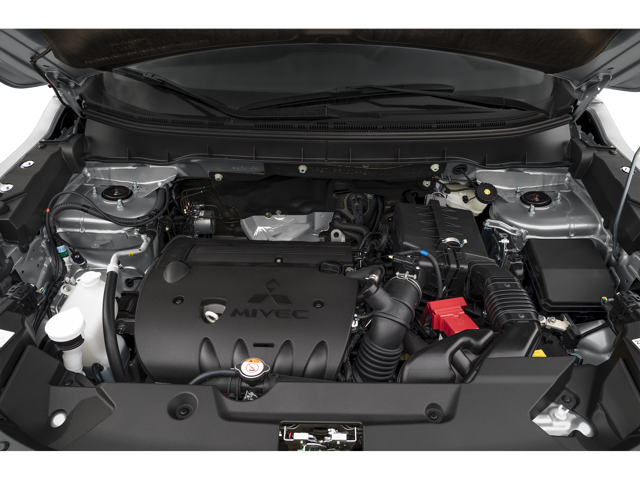
The 2.0-Liter MIVEC Engine
The foundational powerplant for the 2026 Outlander Sport utilizes Mitsubishi Innovative Valve timing Electronic Control (MIVEC) to balance fuel efficiency with responsive power. Generating 148 horsepower, this naturally aspirated block avoids turbo "lag," delivering a linear power curve. It is engineered for drivers prioritizing stop-and-go city traffic within Abilene city limits or short commutes to Dyess Air Force Base.
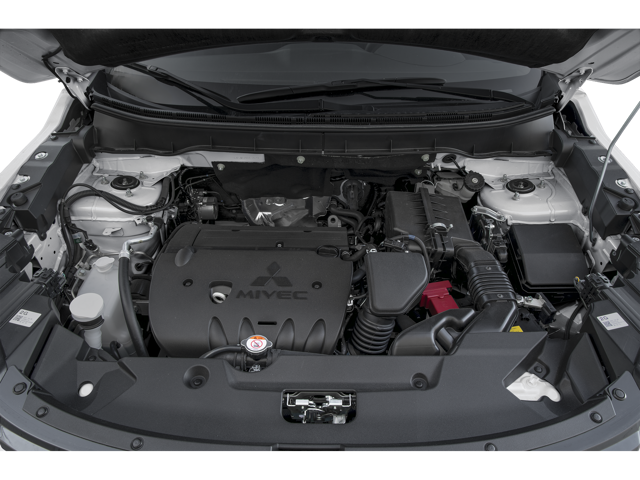
The 2.4-Liter MIVEC Engine
Exclusive to the SEL trim, the 2.4-liter engine increases volumetric efficiency to produce 168 horsepower and 167 lb-ft of torque—a 15 percent increase in torque over the standard engine. This additional thrust is highly noticeable when executing passing maneuvers on two-lane highways outside of Abilene, such as US-83, allowing you to safely navigate around slower traffic without straining the powertrain.
Transmission and Drivetrain Integration
Regardless of which displacement you select, both engines are mated to a continuously variable transmission (CVT). The CVT is programmed to maintain the engine within its optimal RPM band, prioritizing fuel efficiency during cruising and instantly adjusting gear ratios when maximum acceleration is demanded.
Crucially, both engines send power to the pavement via Mitsubishi's standard All-Wheel Control (AWC) system. This ensures that whether you have 148 or 168 horsepower, that energy is actively managed and distributed to the wheels with the most traction, maintaining stability during sudden West Texas downpours.
Test Drive the Powertrains at Arrow Mitsubishi
Reading output data is only the first step. To truly understand the difference in throttle response between the 2.0-liter and 2.4-liter blocks, you must experience them from the driver's seat. Both engines are protected by our 10-year/100,000-mile powertrain limited warranty. Browse our new vehicle inventory to locate models equipped with your preferred engine and schedule a test drive at Arrow Mitsubishi today.

May not represent actual vehicle. (Options, colors, trim and body style may vary)